 English
 Vietnamese

Market
 Kent C. Crouch
-
MicroStrategy Strengthens Bitcoin Holdings with New 1587 BTC
June 16, 2026 09:18:42
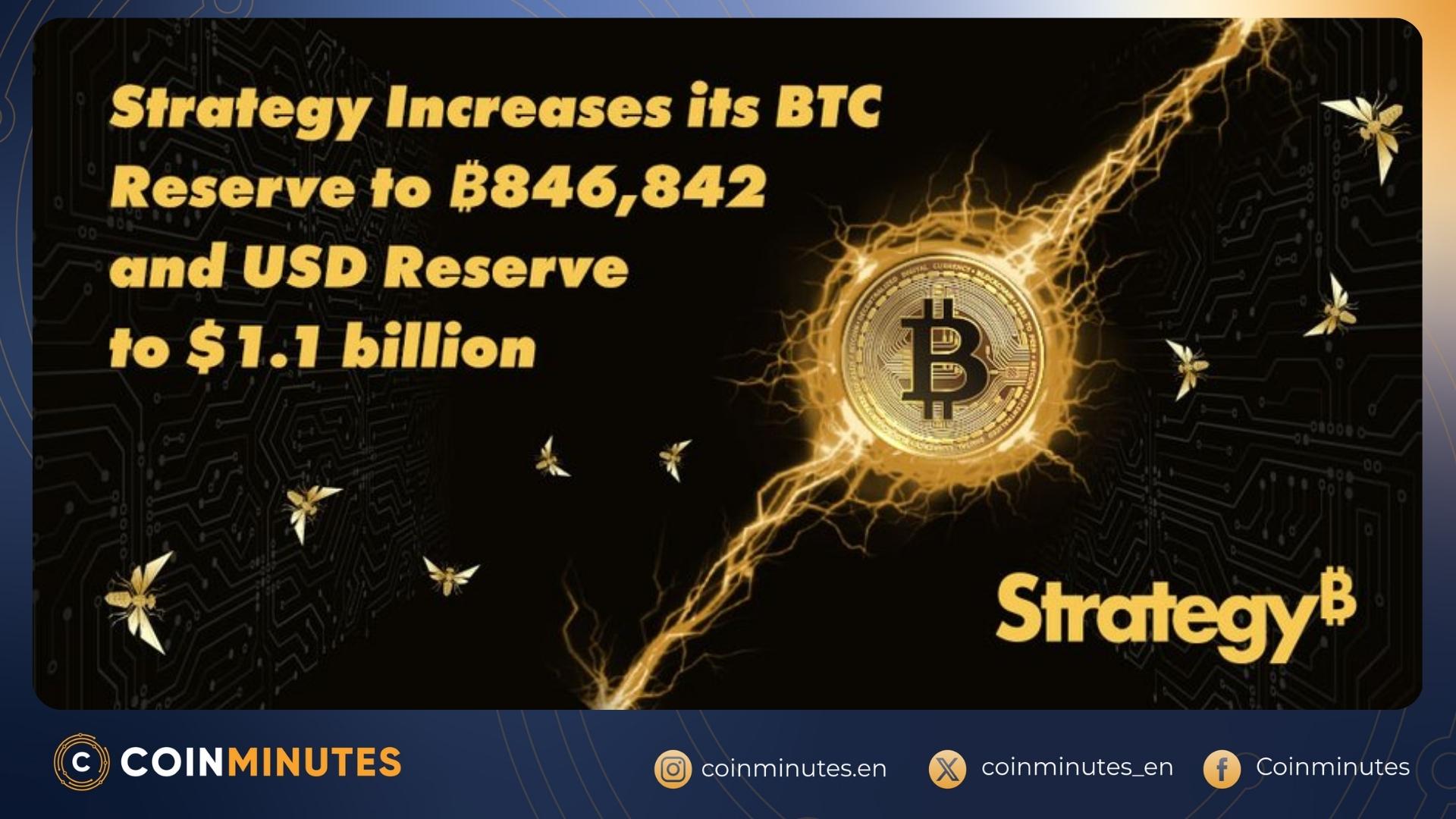
MicroStrategy just bought another 1,587 BTC
MicroStrategy (the company that has evolved into a corporate entity focused on purchasing and holding Bitcoins) purchased an additional 1,587 Bitcoins in addition to its existing vast inventory of coins. It spent approximately $100 million purchasing these additional Bitcoins from June 8th to June 14th, 2026 at an approximate price of $63,024 per coin. As such, the total number of Bitcoins now held by MicroStrategy is 846,842 BTC.
Presently, at today’s Bitcoin price, MicroStrategy holds a total of $56 billion in Bitcoins. For context, this amount is significantly higher than any other publicly traded company currently holding any asset in the form of a single commodity or asset type. It has taken steps to create the largest corporate portfolio of Bitcoin within the world. Under the leadership of executive chairman Michael Saylor (perhaps the most visible advocate of Bitcoin to date), MicroStrategy has continually amassed a larger quantity of Bitcoins since inception.
In order to fund the purchases of additional quantities of Bitcoin, MicroStrategy uses common stock issuances (essentially raising capital by issuing new shares). In conjunction with its latest acquisition of additional quantities of Bitcoin, it increased its available cash reserves by $100 million. As such, MicroStrategy now maintains available cash reserves of $11 billion. By maintaining such a high level of available cash reserves, it will be able to continue acquiring additional quantities of Bitcoin at times when it may need to do so (as opposed to needing to liquidate assets acquired during periods of downturn).
Just recently, MicroStrategy generated news headlines after having sold a portion of its Bitcoins for the first time in many years. As such, investor perception shifted toward concern regarding whether the long term accumulation strategy would remain intact. Its latest acquisition suggests that previous concerns were unfounded and that the long-term accumulation strategy remains unchanged.
Advocates of MicroStrategy believe that the company serves as an example of a model that publically traded companies can utilize to increase shareholder value through their adoption of Bitcoin while simultaneously providing protection against inflationary risks as well as foreign exchange risk. They suggest that the stock performance exhibited by MicroStrategy over recent years supports the effectiveness of utilizing Bitcoin as part of their business strategy.
Critics raise a valid concern: every time MicroStrategy sells new shares to fund Bitcoin purchases, it dilutes the value of existing shareholders' stakes. Whether the Bitcoin gains outweigh the dilution is a debate that continues among analysts. The company's "Bitcoin per share" metric, essentially how much Bitcoin each share of stock represents, is the number shareholders watch most closely to assess whether the strategy is actually delivering value.
For the broader market, consistent institutional buying from a company of MicroStrategy's size provides a steady source of demand for Bitcoin, particularly during quieter periods when retail interest cools. Whether that matters to individual investors depends entirely on how they feel about Bitcoin's long-term future.
-
SIREN Token Whale Dump Triggers Over 90 Percent Price Crash on BNB Chain
June 15, 2026 14:52:07
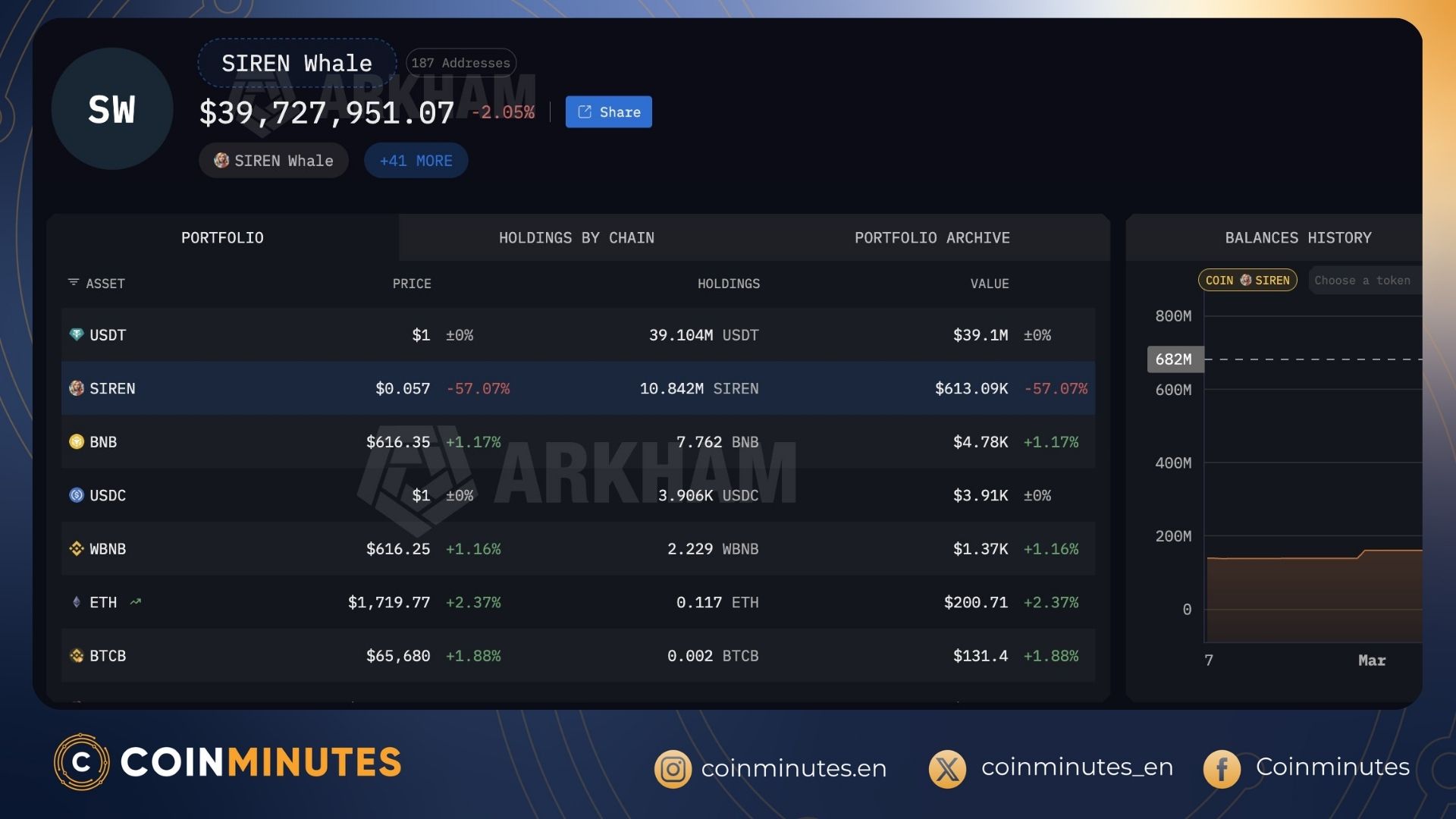
Whale has sold 670M SIREN 92% of the total supply
Over two days in mid-June 2026, an entity with control over nearly all SIREN tokens, dumped approximately 670 million SIREN tokens. At that point this individual or group made close to $65 Million from their dump and caused the price of SIREN token to plummet by over 90%. For those that held SIREN Tokens throughout these days, they suffered through one of the most severe downturns for any investor in cryptocurrency history.
SIREN is a memecoin that was created on the BNB Chain. It rode the wave of interest in AI agents and meme culture in early 2026. As many would recognize from experience in cryptocurrency markets, SIREN token experienced rapid increases in price due to hype throughout 2026, but also steep declines. However, the events that occurred during the middle of June were significantly different.
Through on chain tracking services such as Lookonchain and Arkham Intelligence, it was determined that a group of at least 187 wallets worked collectively to sell out large amounts of SIREN tokens over a period of 2 days. All of these wallets were controlled by the same entity. The amount of SIREN tokens dumped into the open market was aggressive and sustained for 48 hours. The whale dumped approximately 670 million tokens, which represents just shy of 92% of the total SIREN token supply. This sale generated approximately $64.8 million in USDT.
The above referenced funds were split among multiple central exchanges, specifically $25.7 million was sent to Bitget and Bybit. In addition, a portion of the funds ($39.1 million) remained on-chain and so did the remaining balance of SIREN (approximately 478 million).
The effect on SIREN's price was immediate and brutal. The token fell from recent highs of around $0.47–$0.52 all the way down to roughly $0.05 at its lowest point - a collapse of over 90%. Panic selling from retail holders made things worse, and trading volume spiked as people rushed to cut their losses. Many in the community called it a rug pull or an "exit liquidity" play, which is crypto slang for a situation where a large holder uses the enthusiasm of smaller buyers as an opportunity to cash out at their expense.
This was not even the first time SIREN had crashed like this. Earlier in 2026, it had already seen drops of 70–85% in similar episodes, only to partially recover as the whale quietly bought back in at lower prices before repeating the cycle. The core problem is straightforward: when one entity controls the overwhelming majority of a token's supply, they effectively control its price. There is no real market, just the illusion of one.
The SIREN situation is a reminder that in the world of memecoins and hype-driven tokens, extreme ownership concentration is one of the clearest warning signs available. If one wallet or coordinated group holds most of a token's supply, ordinary investors are essentially playing a game where someone else holds all the cards.
-
Aztec Connect Legacy Contract Exploited Draining Over 2 Million Dollars
June 15, 2026 14:32:18
Aztec Connect Legacy Drained $2.1M Gone
On June 14, 2026, an attacker stole about $2.1 million using an older, abandoned smart contract for a project called Aztec Connect, which is a defunct cryptocurrency privacy project that closed down in 2023. This event serves as a clear example of how an abandoned smart contract can still be vulnerable to attackers even after a project has stopped operating.
Aztec Connect is a Layer Two (L2) privacy focused protocol that operates atop Ethereum. It allows users to use decentralized finance (DeFi) applications anonymously. After launching Aztec Connect in 2019-2020, the developers of Aztec Connect (Aztec Labs) continued to develop and launch new versions of this technology. Ultimately, in March 2023, Aztec Labs deprecates Aztec Connect and tells users to withdraw their funds before moving on to build the next generation of privacy networks.
In total, Aztec Labs removed all administrative rights to the contracts including admin keys. Therefore, once the last user withdrew their funds in early 2024, no one could modify or update these contracts ever again.
The attacker finds a flaw in the RollupProcessorV3 contract. They create fake proof, which are basically false documents that the RollupProcessorV3 cannot validate as legitimate. Using this method, they cause the contract to perform withdrawals without depositing into the contract first. In simpler terms, the attacker finds a way to withdraw funds without adding them. The amounts stolen were roughly 909 ETH, 270,000 DAI, wrapped staked Ethereum, and several other digital asset tokens. The sum total of these amounts equaled $2.1 million. These attacks were identified quickly by the security firm's CertiK and BlockSec. Additionally, the wallet that carried out the attack was funded using Tornado Cash, a widely-used digital currency laundering service for obscuring the origins of funds.
Here is where the situation becomes particularly painful. Because Aztec Labs deliberately made the contract immutable and surrendered all administrative control, there is nothing anyone can do. The team cannot pause the contract, patch the vulnerability, or reverse the transactions. The attacker walked away, and the door remains technically open.
Aztec Labs was quick to confirm the incident and clarify that this legacy contract has absolutely no connection to their current products, their active network, or the AZTEC token. Users of the modern Aztec platform are not affected and their funds are safe.
This incident is a wake-up call for the broader crypto industry. Old, seemingly inactive contracts can still hold real money, and that makes them attractive targets for patient, technically skilled attackers. When projects wind down, simply walking away from the code isn't enough. Complete fund migration and proper decommissioning procedures are essential. The Aztec Connect exploit is a costly reminder that in blockchain, abandoned doesn't mean harmless.
-
Anthropic Disables Fable 5 and Mythos 5 Following US Government Export Controls
June 13, 2026 15:21:08

Anthropic Suspends Claude Fable 5 and Mythos 5
The U.S. Government ordered Anthropic to disable access to two of its leading AI systems (Claude Fable 5 and Claude Mythos 5) due to an alleged national-security threat. This marks the first time that the U.S. has enforced export-control regulations on access to a large language model, it has resulted in significant effects.
On June 9, 2026, Anthropic introduced both models, with positive reviews from several reviewers at launch. Both models demonstrated a dramatic advancement in reasoning ability, coding ability, and processing large amounts of data. By the end of June, the U.S. Department of Commerce had sent Anthropic a formal directive regarding one potential national security risk. The directive cited a very limited vulnerability within the two models: a simple 'basic software' vulnerability-discovery capability. As part of this directive, the department invoked "deemed export" rules, which prevent foreign nationals from using certain technologies, even if those individuals are physically located within the United States.
Despite pushback from Anthropic, including claims that other companies were offering similar capabilities (GPT-5.5), and results from Anthropic's own testing that indicated that there existed no general exploits that could cause catastrophic damage to their systems. The U.S. government refused to rescind or modify their directive.
In response to the government's refusal to allow them to implement an alternative solution for verifying users' nationality prior to allowing use of either Model, Anthropic suspended access to both models globally. That action caused disruption to paying users in every country in the World, including the United States. All other Claude models (Opus and Sonnet) remain active.
Developers who have created workflows using the newer model versions are now having to scramble and at least one developer announced they would be cancelling their subscription. Many believe that implementing such drastic limitations on frontier AI models may stifle U.S. innovation and push those same developers to use open-source alternatives or develop their applications with non-restricted foreign competitors.
The events of the past few weeks signal that government entities are now prepared to begin treating advanced AI technologies as a regulated dual-use technology, i.e., like military equipment or encryption software, as opposed to just another piece of software. The event should also further discussions regarding "Sovereign AI" (i.e., each nation developing its own models so that it does not rely on foreign controlled systems).
Anthropic and U.S. governmental agencies continue to negotiate. It is unknown whether Fable 5 and Mythos 5 will ultimately return in some modified version. Regardless of how negotiations resolve, this event has already established a precedent that will affect how Frontier AI is developed, distributed and governed for many years ahead.
-
SpaceX Completes Historic IPO Raising 75 Billion USD with Valuation Over 2 Trillion USD
June 13, 2026 15:15:20
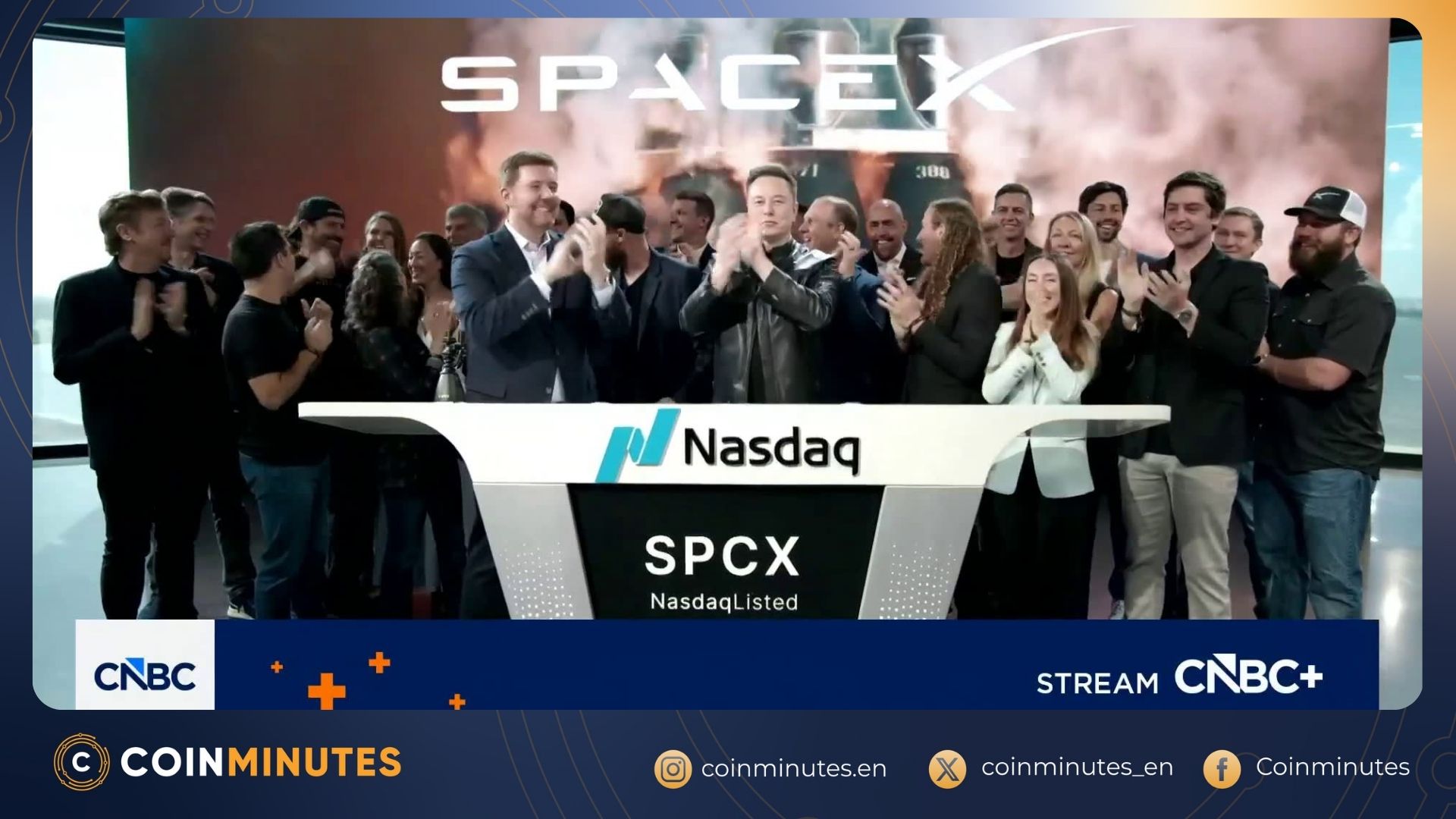
The company just raised a record-breaking $75 billion
SpaceX, the rocket and satellite company of Elon Musk, went public for trading on the Nasdaq Stock Exchange on June 12, 2026 with an IPO listing using the ticker symbol SPCX. This was the largest IPO offering in history. It raised $75 billion, which is double that of Saudi Aramco's historic IPO in 2019.
The average cost per share was $135 for SpaceX’s IPO. This put the valuation of SpaceX at approximately $1.77 trillion. SpaceX issued approximately 555 million Class A shares. Demand for the IPO ranged between $250 billion and $350 billion. Therefore, the demand was three to four times greater than the number of shares available. In this case, the percentage of shares that will be allocated to retail investors represents an extraordinary amount. Typically, individual investors account for no more than 5-10% of all allocations in an IPO. Individual investors do not have access to institutional or other investments.
On opening, SPCX reached $150.00, 11% greater than the IPO price. On the same day, SPCX peaked at $176 before ending at $160. This represented a gain of almost 20% for SPCX from the opening through end-of-day. With respect to valuation, SPCX reached a valuation of over $2.1 trillion. As such, at the time of opening, SPCX became one of the most valuable public companies in the world.
Revenue for SPCX was approximately $18.7 billion for 2025. Revenue consisted of two primary components: subscription services from Starlink and government contracts. SPCX posted a net operating loss of approximately $4.2 billion. Such losses are directly related to SPCX's aggressive investment strategy. Elon Musk intends to utilize funds generated by the sale of shares to fund R&D initiatives, expand Starlink capabilities, build-out AI capabilities associated with his new company called xAI, and pay-down existing debt obligations.
As a result of the IPO, Elon Musk became the world's first trillionaire. Additionally, tens of thousands of SPCX employees became instant millionaires as they received stock options based upon their tenure with the company.
At over $2 trillion, SpaceX is valued far above what its current revenues alone would support. Supporters argue the price reflects enormous long-term potential in satellite internet, reusable rockets, and future space infrastructure. Skeptics point to the ongoing losses and real competitive pressures the company faces. Both sides have a point, and the market will be watching SPCX closely in the weeks ahead to see how the stock performs once the opening excitement fades.
For now, SpaceX's public debut stands as one of the most significant moments in both aerospace and financial market history.
-
Humanity Protocol Token Crashes After Major Private Key Breach Drains Over 30 Million Dollars
June 9, 2026 15:17:40
Humanity Protocol Major Private Key Breach Drains
H, the native token of a blockchain-based identity project known as the Humanity Protocol, fell by almost 90% in about a day after it suffered a severe security breach that enabled hackers to obtain the private keys (the master passwords controlling crypto wallets) and transfer greater than $30 million from wallets associated with the protocol.
SpecterAnalyst was among the first to report the breach, posting on Twitter in the late afternoon of June 8, stating that at least 17 wallets were drained. Estimates placed the loss at roughly $5 million, but as the extent of the breach became clearer, this number skyrocketed to between $30 and $32 million.
In addition to stealing what existed in their targeted wallets, the attackers were able to generate approximately 200 million additional H tokens using their ability to compromise the multi-signature wallet system, which is designed to have several parties approve each movement of funds prior to execution. Once the tokens were generated, they were exchanged for Binance Coin and Ethereum. After generating and exchanging both the stolen and newly generated tokens into Ethereum and Binance Coin, the attackers reportedly walked off with around 18,510 ETH ($30.8 million) and 1,548 BNB prior to the drying-up of liquidity in the decentralized exchanges. At this date of publication, the hacker reportedly has in excess of 111 million H tokens.
In response to the attack, trading activity increased beyond $500 million in one 24-hour period as panicked selling occurred throughout the market.
Terence Kwok, founder of Humanity Protocol, announced on Twitter the breach of his protocol, stating that a person affiliated with the Humanity Foundation had lost access to some private keys. As such he asked all users to suspend activity on the liquidity pool and bridge of the project until further notice to ensure user safety, and stated that the company is working closely with outside security experts and exchanges to mitigate the loss.
Additionally, the timing of this breach cannot be seen as coincidental. Humanity Protocol will be having a major token unlock on June 25, 2026, which means millions of dollars worth of tokens that were once "locked" will be able to enter into trading. Therefore, the timing of this breach can also raise suspicion about whether or not this breach was staged by either market makers or whales who wish to sell their holdings prior to the unlock. This is based off the fact that Humanity Protocol has historically had many large holders (i.e., whales), and therefore there is a reasonable basis for speculating that these parties may have benefited financially from this breach. Additionally, the project has experienced issues related to its airdrops and token distributions. Therefore, it has been difficult for the teams involved to alleviate concerns regarding the legitimacy of this breach.
As an additional note, Humanity Protocol is positioned as a competing protocol to Worldcoin. Specifically, it utilizes palm vein scanning technology along with other forms of advanced cryptography to allow each user to create and store their own public key while ensuring that the user behind the public key is a one-time use individual. Humanity Protocol has recently reached a value of over $1 billion and received investments from several high-profile cryptocurrency companies including Pantera Capital, Jump Crypto, and Animoca Brands.
As of June 9, no funds have been recovered and no compensation plan has been announced. The team has urged holders to follow only official channels and to be wary of scammers offering fake "recovery services," which typically appear after high-profile incidents like this one.
The coming days will be critical. Humanity Protocol needs to not only stabilize its token and restore user confidence, but also publish a thorough post-mortem explaining exactly how the breach occurred. Whether the community believes that explanation or the project can survive the reputational damage remains to be seen.
-
Sam Bankman-Fried Formally Applies for Presidential Pardon from Donald Trump Amid FTX Fraud Conviction
June 9, 2026 15:12:13
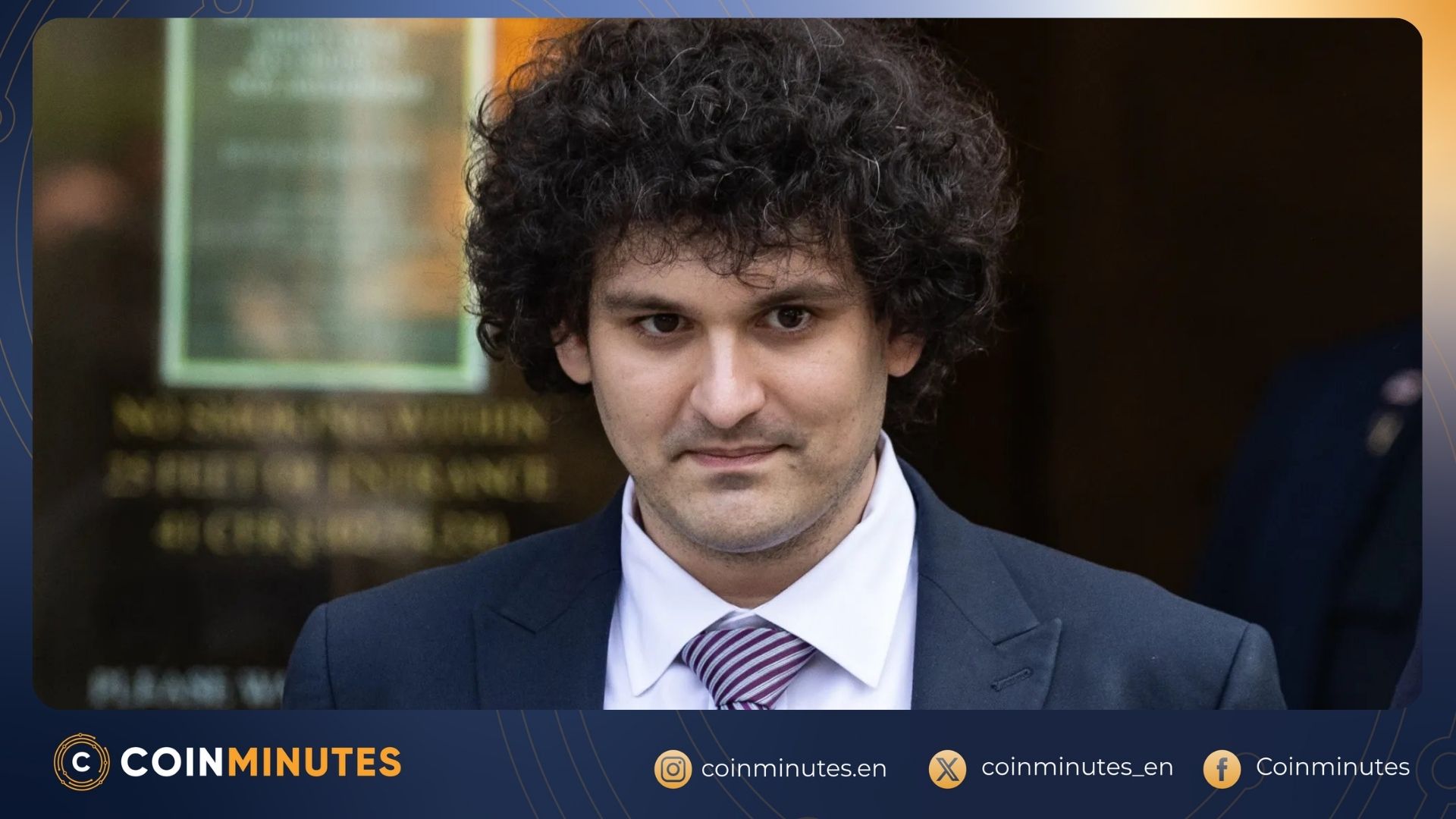
Sam Bankman-Fried Formally Applies for Presidential Pardon
Sam Bankman-Fried (also referred to as SBF) - founder of collapsed cryptocurrency exchange FTX and now in federal prison with a 25-year sentence - formally requested a presidential pardon from Donald Trump. The pardon petition was made via the Office of the Pardon Attorney (Department of Justice) which lists the case as "pending". This is quite a move for someone in prison and may have a less-than-warm reaction.
SBF was convicted in March 2024 of several counts of fraud, conspiracy, and money laundering. These convictions were a direct result of the collapse of FTX in November 2022 where it was discovered that billions of dollars in customer funds were transferred to Alameda Research, his associated hedge fund. Those monies were used to pay for FTX's trading losses, support SBF's personal expenses and contribute to political campaigns. Investors are believed to have lost around $10 billion. FTX had reached a valuation of approximately more than $30 billion and SBF was arguably one of the most powerful individuals within the crypto space. By any measure, the decline from the top was remarkable.
For several months, there has been behind-the-scenes politicking regarding SBF (and his family) attempting to reach out to those who are close to or part of the Trump administration. After these efforts, SBF formally applied for a presidential pardon in 2026. In addition, while a post-sentence pardon can restore some civil rights (such as voting), it will likely not shorten a current prison sentence. Since SBF continues to appeal his conviction, this creates a complex legal situation.
There's an important point regarding Trump's political calculations. Trump previously stated (in 2026) that he would never give SBF a pardon. In addition to being a major contributor to Democratic causes and supporting Joe Biden’s 2024 election bid, there is little chance of a pardon from Trump. It should be noted that although Binance Founder Changpeng Zhao plead guilty to various financial crimes, he was granted a pardon by Trump due to lack of association with Democrats.
Upon hearing news of the potential pardon request, the FTT (the original token offered by FTX) increased by up to 60%. Any increase such as this should be viewed with some degree of skepticism as it represents speculation based upon low liquidity of the token rather than an actual development in the status of FTX or SBF.
Legal and political analysts generally do not believe that SBF will receive a pardon. Opponents of SBF and those affected by the FTX collapse are highly critical of the possibility of a pardon, and based upon the large scale of the fraud committed, any future decision made by either current or former presidents could result in both political backlash against them. Although a Presidential Pardon is an absolute constitutional right with absolutely no limitations, they are typically subject to numerous political factors. Based upon previous statements made by Trump indicating his unwillingness to grant SBF a pardon, the ongoing appeal, and continued attempts to obtain restitution from all parties involved in the FTX collapse, it appears that SBF has a very remote chance of receiving a pardon at best.
It remains interesting to continue monitoring developments in regards to SBF, not solely because of how they may impact him, but also due to the rapidly evolving relationships between cryptocurrency, political influence, and the judicial systems within each country.
-
Zcash Price Crashes After Claude AI Uncovered Critical Orchard Bug
June 5, 2026 17:15:14
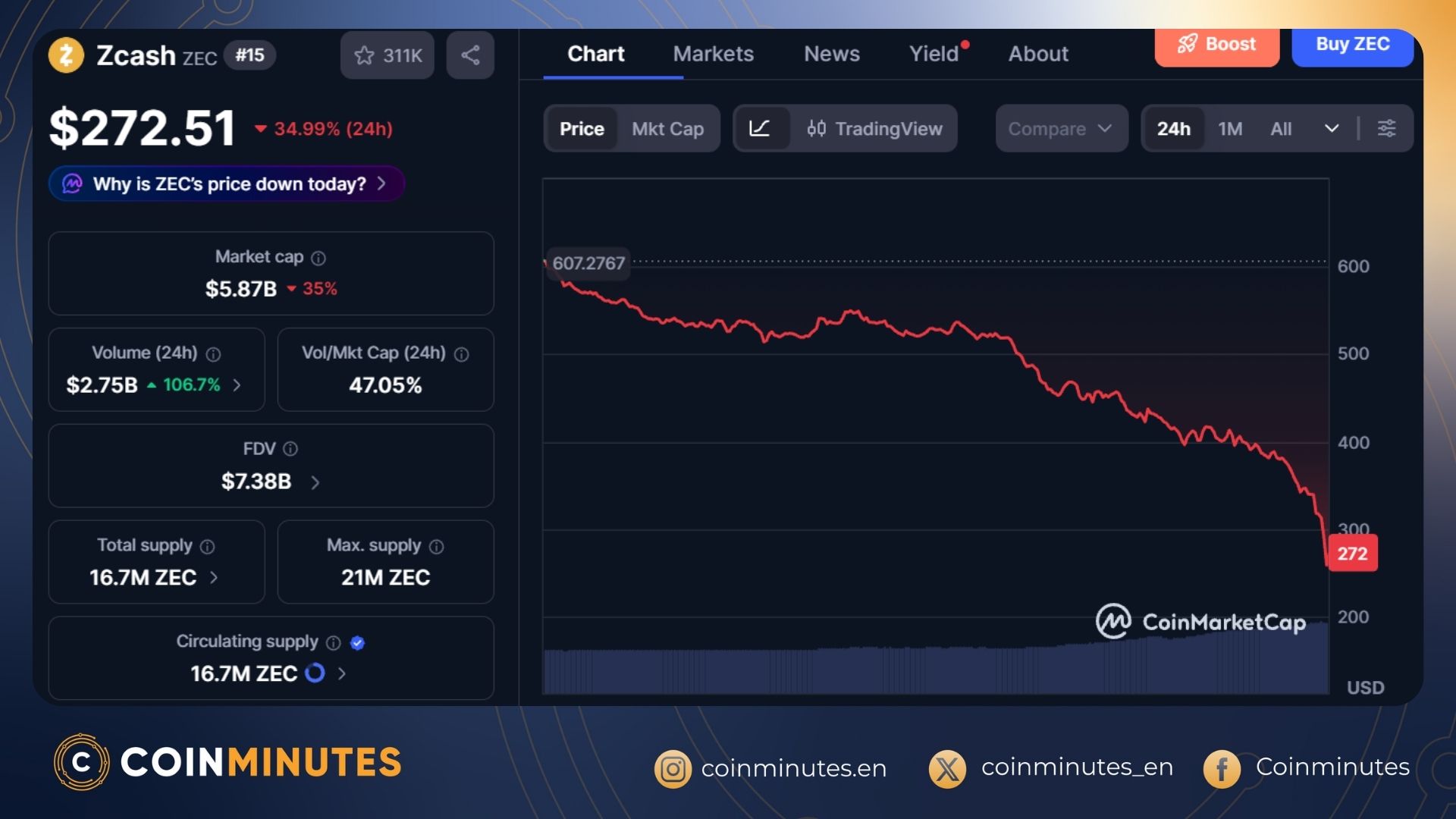
ZEC Crashed Hard in One Day After an AI-Discovered Bug
Zcash has experienced quite a volatile week. A serious security vulnerability was discovered in one of its core privacy systems. Fortunately, the developers were able to respond promptly and issue a fix before the bug was exploited. So, what happened? To find the answer we will examine two different factors: the technical aspects of the problem and the underlying market dynamics at play.
On May 29th independent security researcher Taylor Hornby found a significant bug while performing his normal routine audit of Zcash’s Orchard shielded pool. This component of Zcash provides a layer of encryption to allow users to perform anonymous, untrackable transactions. What makes this bug unique is that Taylor used a new AI tool named Claude Opus created by Anthropic to assist him in creating a working prototype (proof-of-concept) of an exploit. With the aid of the AI, he demonstrated theoretically how a hacker could use the bug to produce infinite amounts of counterfeit ZEC tokens within the protected transaction area (shielded environment). In other words, hypothetically speaking, a hacker could generate as many fake ZEC tokens as they wanted without anyone knowing.
Fortunately, no such exploits occurred. The developers confirmed there were no attacks or unauthorized access to funds using the bug. Furthermore, the developers implemented another safety measure called the "turnstile" which ensures that even if an attacker attempted to print additional ZEC tokens through this method, the total number of available tokens on the Zcash blockchain would remain intact.
As soon as Taylor reported the bug to the developer team, they immediately reacted by implementing an urgent software update that temporarily shut down transactions through the Orchard shielded pool. As part of their quick response plan, they also issued a follow-on network update (NU6.2) that replaced the vulnerable code with new secure code and restored functionality to the entire ecosystem. Ultimately, after reviewing all relevant logs, no user funds were compromised or taken.
Regardless of the swift actions taken by the developers, the value of ZEC fell by 25-30% over one trading day. When we see price movements like this occur when no financial loss occurs to users of the platform, it tells us that factors other than technical risks are contributing to these downward moves.
Market participants have observed a sequence of events that, once recognized, is quite difficult to overlook. Multicoin Capital, an investment firm, had invested heavily in ZEC at a time when the price of ZEC was approximately $200. More recently, with prices climbing to $600, there has been increasing media attention on the potential of Zcash. Prominent figures (such as former BitMEX CEO Arthur Hayes) have repeatedly expressed their belief that ZEC may potentially be valued in excess of $1000 and have promoted other tokens associated with Zcash.
The same formula is used frequently in cryptocurrency markets. Large investors buy into new cryptocurrencies early and often without fanfare, large influencers make great efforts to create public awareness regarding these investments and create hype among retail investors in anticipation of buying close to the market peak, and large investors sell out or short against the cryptocurrency after a negative catalyst (in this instance, a securities disclosure) emerges and they can exit. Retail investors are generally the ones who are left "holding the bag" after a negative event occurs in a cryptocurrency they purchased late in its run-up.
This example illustrates both aspects of this type of scenario. On one hand, the underlying technology behind privacy preserving systems such as Zcash's zero knowledge proofs is highly complex and difficult to verify, so it is possible that vulnerabilities will exist. The fact that the vulnerability identified in this example was identified prior to any loss occurring to users is indeed a testament to the quality of work done by the developers.
For traders and investors, the lesson is straightforward even if it's easy to forget in the moment: when a coin is everywhere in the news, influencers are calling for dramatic price targets, and the narrative feels unstoppable, that's often exactly when caution is most warranted. The Zcash correction this week is a clear reminder that in crypto, the loudest enthusiasm and the sharpest corrections tend to arrive together.
-
Zcash Executes Emergency Hard Fork to Fix Critical Orchard Shielded Pool Vulnerability
June 4, 2026 10:00:14
Zcash has downtime with failed to produce a new block
Zcash, which is arguably one of the most popular cryptocurrency's focused on privacy, has recently experienced a major security flaw within an important component of the system. In less than five days, developers were able to identify, contain, fix and patch the bug. The bug did not result in any loss of funds nor any indication of the bug having been used.
This issue was located in the Orchard shielded pool which is the privacy level of the Zcash network that allows for sending encrypted transactions that effectively hide all information about those transaction from outside parties. This issue resided with the cryptographic coding used to verify those private transactions. In theory this type of error could have been utilized to double-spend the same amount of currency (spend the money twice) without anyone else knowing. If such an error had been successfully exploited then the community would have lost a great deal of confidence in the integrity of their system.
The Zcash development team as part of the Zcash Foundation and Zcash Open Development Lab found the bug via a series of scheduled security tests beginning June 1st, 2026. Since no one had yet exploited the bug, they moved quickly.
Beginning with their first phase of responses, the developers implemented an emergency patch that would disable all Orchard related transaction (i.e., put the Orchard portion of the network on hold) until a more complete solution could be developed. However, regular transaction processing continued as normal for most users during this time frame.
Their next and final step, was to implement a more complete network upgrade referred to as NU6.2. The new implementation went live approximately June 2-3, 2026. The updated implementation addressed the error and restored full functionality to the Orchard application including improved security. The development group successfully identified the problem within five days from discovery to resolution.
As the network transitions were occurring, several block chain explorers (tools designed to provide tracking of transactions and real-time monitoring of activity on the network), became delayed and reflected older data regarding the current state of the network. Social media erupted in concerns regarding whether or not Zcash has "gone down." While the network was functioning properly at all times; it was simply a matter of the exploration tools being delayed and providing inaccurate data. By June 3rd, a complete review of operations confirmed that all systems were stable.
Despite the initial panic, ZEC rose over 10% with a closing price near $600. Based upon what appeared to be a positive assessment of the developer's ability to identify and correct a major flaw in the system within five business days - in addition to their transparency and no loss of value - investors felt that this demonstrated confidence in the abilities of the development team. Additionally, the security protocols built into Zcash validated that the overall coin supply remained unaltered and that no coins were created or lost from the process.
If you run a Zcash node, update to Zebra version 5.0.0 as soon as possible to stay compatible with the new network rules. Major exchanges that briefly paused deposits and withdrawals during the upgrade have since resumed normal operations.
The broader takeaway goes beyond Zcash. Privacy-preserving technology is among the most technically demanding in the cryptocurrency space. When a team handles a serious problem with speed, transparency, and a clean outcome, it builds exactly the kind of credibility that long-term adoption requires. And this week, Zcash delivered on all three.
-
Visa Mastercard Stripe Joint Stablecoin Platform Set to Transform Global Payments
June 4, 2026 09:57:45
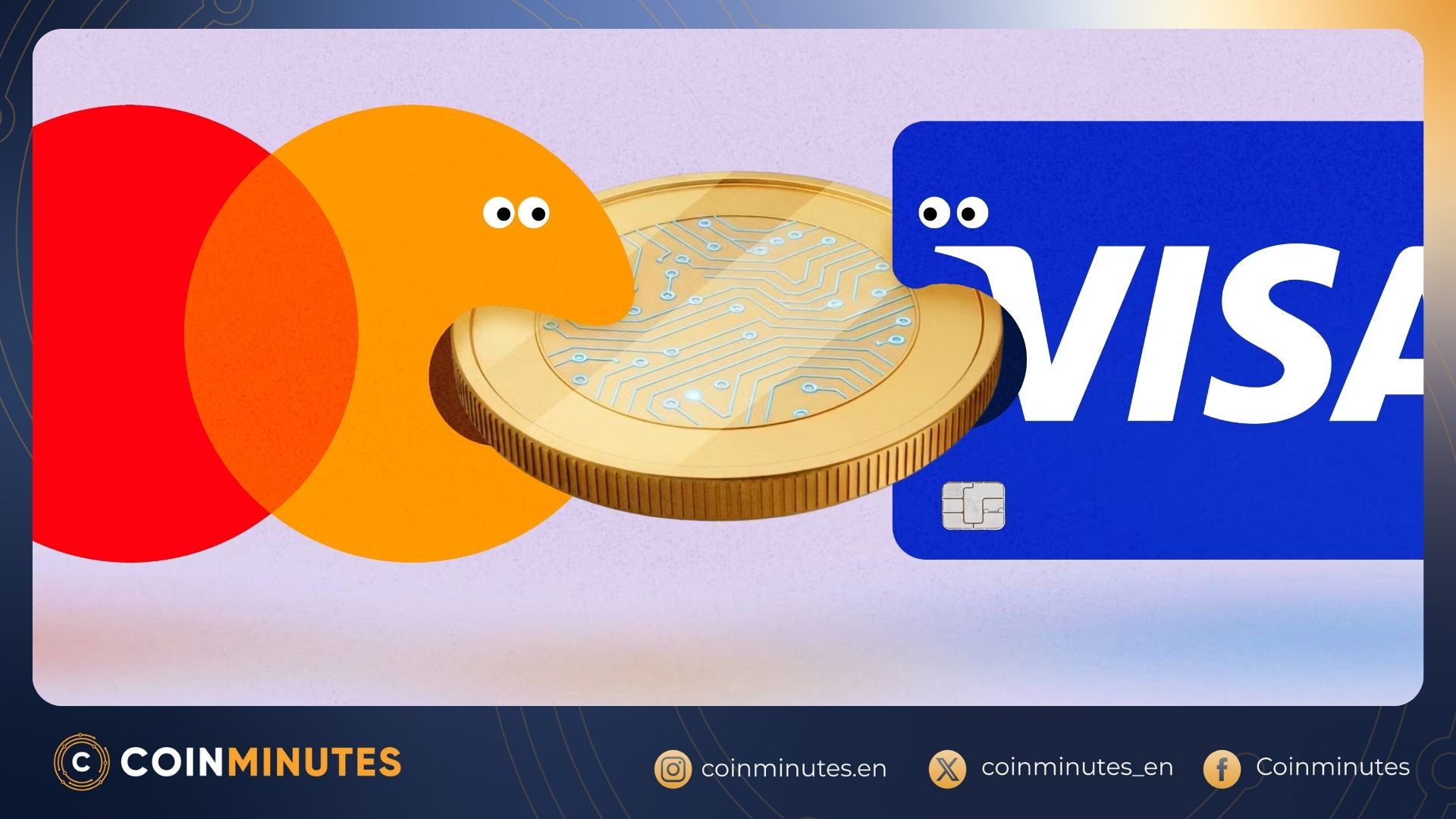
Visa, Mastercard and Stripe are team up to launch a stablecoin platform
Three of the leading firms in global payment systems (Visa, Mastercard, and Stripe) may develop a new system for transferring funds through the use of "stablecoin" (digital currencies linked to a traditional fiat currency such as U.S. dollars). The three firms are developing this new transfer system together using stablecoins. Additionally, it appears that Coinbase, which is the largest cryptocurrency exchange based in the United States, may potentially participate in the development of the transfer system.
There has been no formal announcement regarding the name nor any information related to a specific launch date or any official statements from those involved.
Why Payment Giants Are Betting Big on Stablecoins
Stablecoins have evolved from a relatively unknown niche area to become a significant part of global finance. Today, the combined market capitalization of all stablecoins issued exceeds $325 billion. Transaction volume per day for well-established stablecoins such as USDT & USDC continues to grow at an accelerated pace toward becoming competitive to traditional payment systems. Companies such as Visa and MasterCard cannot afford to be unresponsive to these trends, they need to be proactive.
Both Visa and MasterCard have individually begun developing the technology necessary to support the use of stablecoins. In the early days of their development, Stripe acquired Bridge, an entity focused on providing the software solutions necessary to create, transfer and integrate stablecoins into a merchant's payment processing and credit/debit card products. With this acquisition, Stripe was able to provide the means for businesses to begin using stablecoins. Visa also began expanding their ability to support the issuance of stablecoins across multiple blockchain platforms including Ethereum, Solana and Avalanche. Furthermore, Visa has entered into a partnership agreement with Bridge in order to issue stablecoin linked debit/credit cards available globally in more than 100 different markets. In February of 2026, MasterCard followed suit and acquired BVNK, a digital on-chain payment platform provider for approximately $1.8 billion. As a result of this acquisition, MasterCard can offer regulated stablecoins such as USDC, PYUSD and RLUSD with near instant settlement capability to banks and merchants in over 210 different countries.
The joint initiative will combine the technologies developed by each party into common infrastructure allowing for rapid, cost effective international settlements and seamlessly integrated into existing card and settlement networks.
Potential Impact on the Crypto and Finance Industry
The involvement of Visa, Mastercard, and Stripe changes the stablecoin conversation entirely. These aren't crypto startups, they are the companies that process a significant portion of the world's everyday payments. If they build stablecoin infrastructure together, it could put this technology in front of billions of people through the apps, cards, and checkout pages they already use daily.
For businesses, the potential benefits are real: faster international transfers, lower fees, and programmable payment features that traditional banking systems simply can't offer. For consumers, stablecoins could eventually become as invisible and effortless as tapping a contactless card.
That said, not everyone is cheering without reservation. Some industry observers have raised legitimate questions about centralization: If a handful of corporate giants control the rails of stablecoin payments, that concentrates significant power in very few hands. Increased regulatory scrutiny is also likely as governments pay closer attention to how this infrastructure develops. Markets reacted with mild optimism, with Visa and Mastercard shares seeing slight after-hours movement following the report — a sign of cautious interest rather than outright euphoria.
What Comes Next?
The details still remain largely under wraps. The exact structure of the platform, which blockchains it will support, and when it might launch are all still unclear. No official statements have been issued by any of the companies involved.
What is clear is the direction of travel. Legacy payment networks are no longer watching blockchain from the sidelines, they are actively building on it. For businesses, fintechs, and anyone who sends or receives money across borders, this collaboration is worth watching closely. Official announcements, when they come, could signal one of the most significant shifts in how global payments work in a generation.


Crypto Market Analysis: Early 2026 – Narrative Flows and Investment Opportunities
 Richard Espinoza
January 30, 2026
Richard Espinoza
January 30, 2026
Frequently asked questions
CoinMinutes' Market category is your first choice for crypto market news, trends, insights, and analysis from all over the world. We report on fresh market changes as they occur, follow both short and long-term trends of both main and new assets. We also offer detailed analysis for readers to understand what is behind the change of price from big economic changes and institutional actions to on-chain data and sentiment indicators.
If huge market changes occur, such as a major coin being listed on an exchange, a large-scale liquidation event, or an unexpected macroeconomic announcement, CoinMinutes will provide you with fast, factually correct news that includes well-explained background information. Our team goes beyond simply reporting what happened; they explain why it is important for the overall market, so that readers will be one step ahead of the developments by knowing the reasons rather than just the results.
CoinMinutes keeps a close eye on a vast array of market trends, starting with Bitcoin. Ethereum price cycles are influenced by the rise and fall of narratives such as DeFi, AI tokens, Layer 2 solutions, and memecoins. Our coverage of trends examines changes in market sentiment over a short period as well as those changes that shape the market over time. This is done by analyzing on-chain metrics, trading volume patterns, and macroeconomic context to provide readers with a comprehensive view of where the market is headed.
While basic price reporting only tells you whether the price of an asset has gone up or down, analysis content in the Market category of CoinMinutes goes further into the reasons behind the behavior of the market. It covers technical analysis of important price levels, fundamental evaluation of project developments, and a macro-level view linking the crypto markets to the overall financial world. Every analysis article is clearly marked and designed to give readers an understanding that they can use actively, not just the bare data.
Yes, certainly. CoinMinutes' Market section is designed to cater to individuals with varying degrees of experience. Market news is communicated in a simple, clear way so that newbies will not be lost, while at the same time, our trend and analysis pieces contain the layers and subtleties that seasoned investors require. No matter if you are exploring your first market cycle or seeking comprehensive insights to develop a trading strategy, the Market section is capable of providing you with valuable resources.
-
 News
News
-
Market
-
Learn
-
Reviews
 Ashley Carter
 Paul Ferguson